Old Money Style: 15 Real Outfit Ideas That Actually Work
Why “Old Money Style” Is Harder to Pin Down Than People Think
People search “old money style” expecting a formula, but most guides just show a photo with no explanation of what fabric, cut, or color choice actually makes it work. The result is a lot of outfits that look close but slightly off too styled, too matchy, or built from the wrong fabric entirely. This guide breaks down 15 outfits with the real details: what’s tailored, what to look for in fabric, and one practical tip per look that most pages skip.
What Defines This Style Right Now
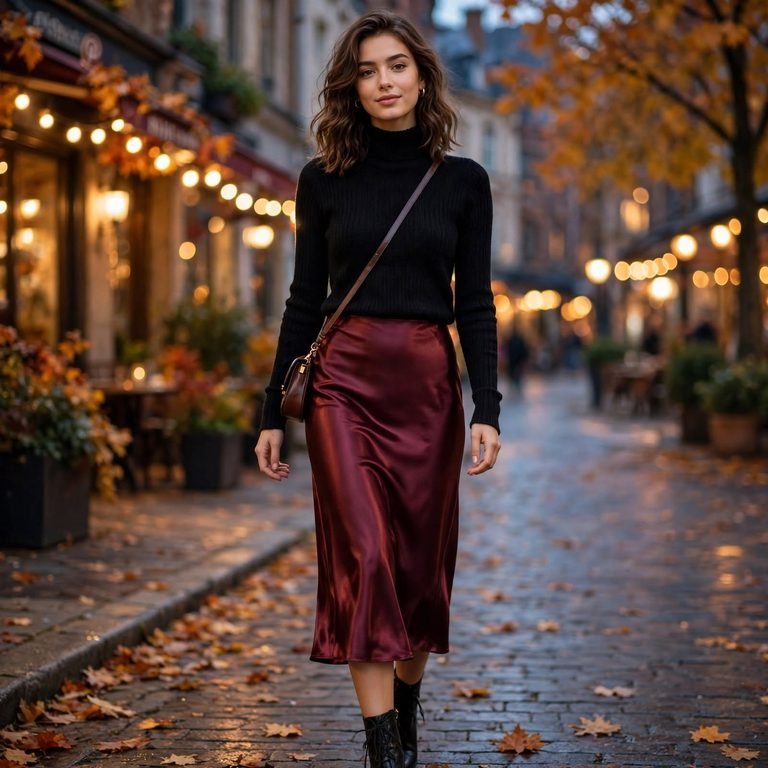
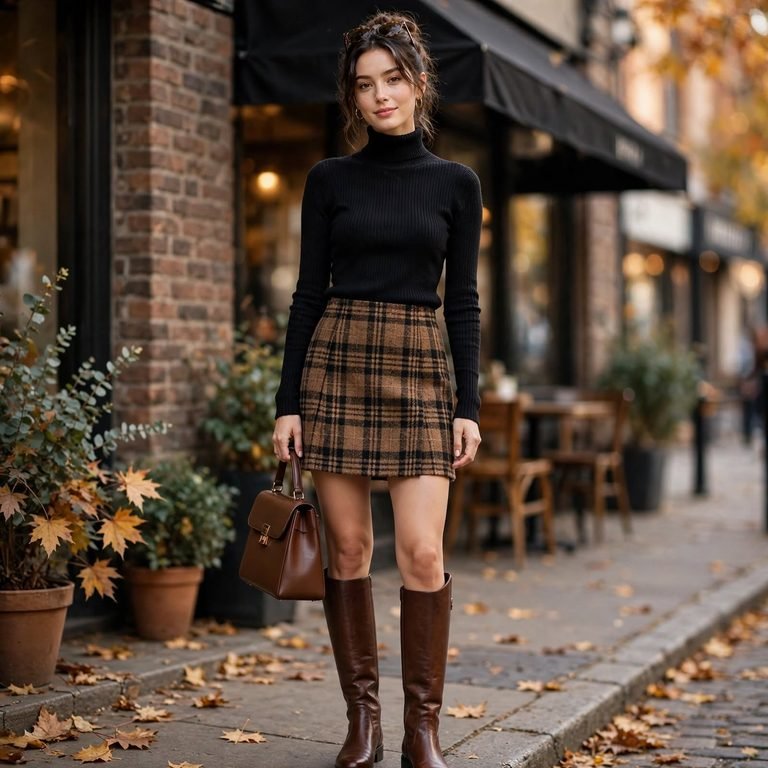
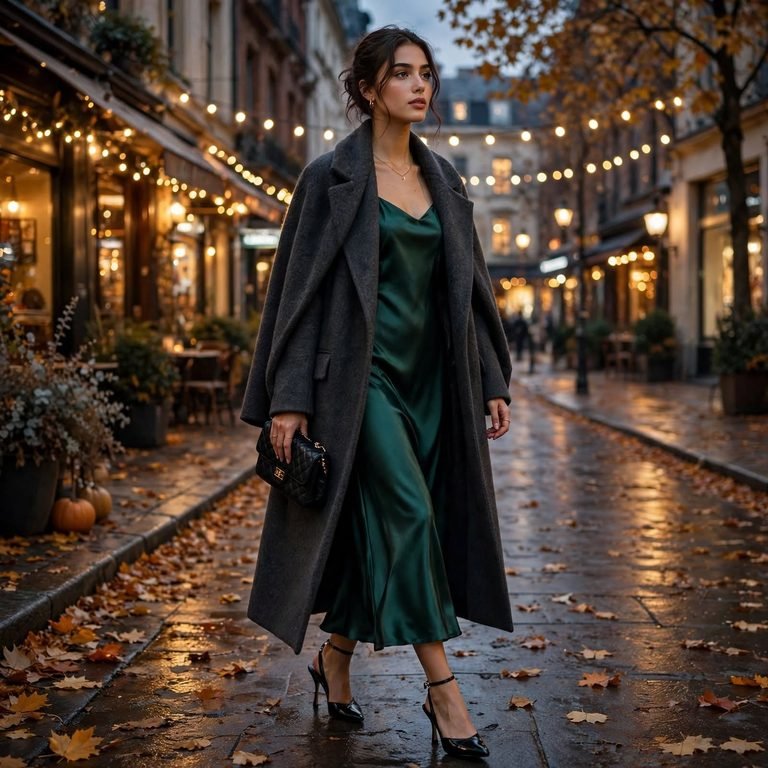
Old money style is built on restraint rather than any single trend the same handful of colors, fabrics, and silhouettes show up decade after decade instead of shifting each season. The palette stays narrow: navy, cream, camel, hunter green, and burgundy, chosen because they mix easily without ever clashing. Fabric matters more here than in most styles wool, cotton poplin, cashmere, and leather read as intentional, while polyester or shiny synthetic blends undercut the whole look even with the right cut. Fit is close to the body but never tight, and pieces are meant to last years, not one season. The one real shift lately is that people are mixing a single traditional piece a blazer, a rugby shirt with something plainer and more modern, instead of matching every single item to the theme.
Signature Pieces, Styled Simply
The pieces most associated with this style, worn in the least fussy way possible.
1. Cable-Knit Sweater With Straight-Leg Trousers
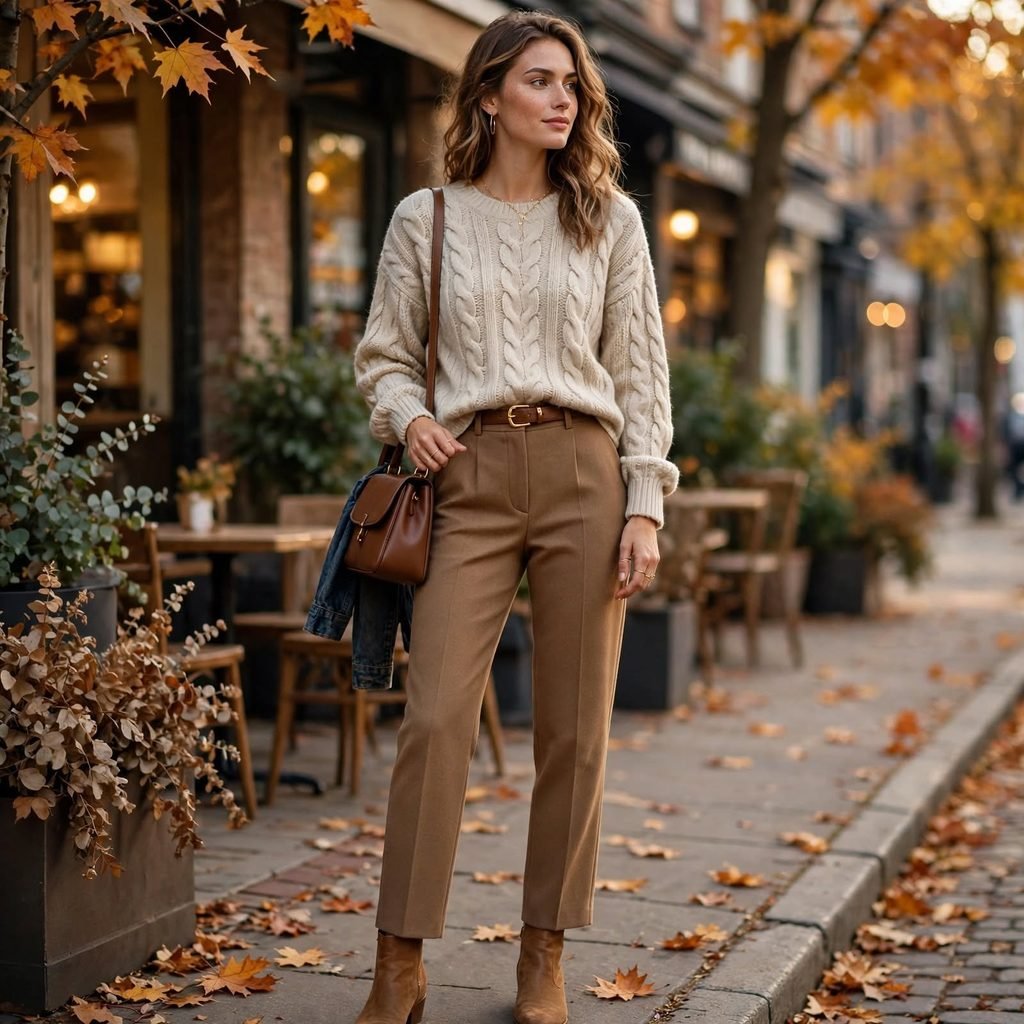
Tuck a cream cable-knit sweater into camel straight-leg trousers with a clean break at the ankle. The knit should be substantial enough to hold shape on its own, not thin or clingy. Add penny loafers and a leather belt matched to your shoes. Good for a daytime outing or a casual meeting where you still want to look deliberate. Tip: a merino wool-blend sweater gets you most of the texture and drape of cashmere for a fraction of the price, which matters if you’re building this style gradually.
2. Boat-Neck Sweater With a Collared Shirt Underneath
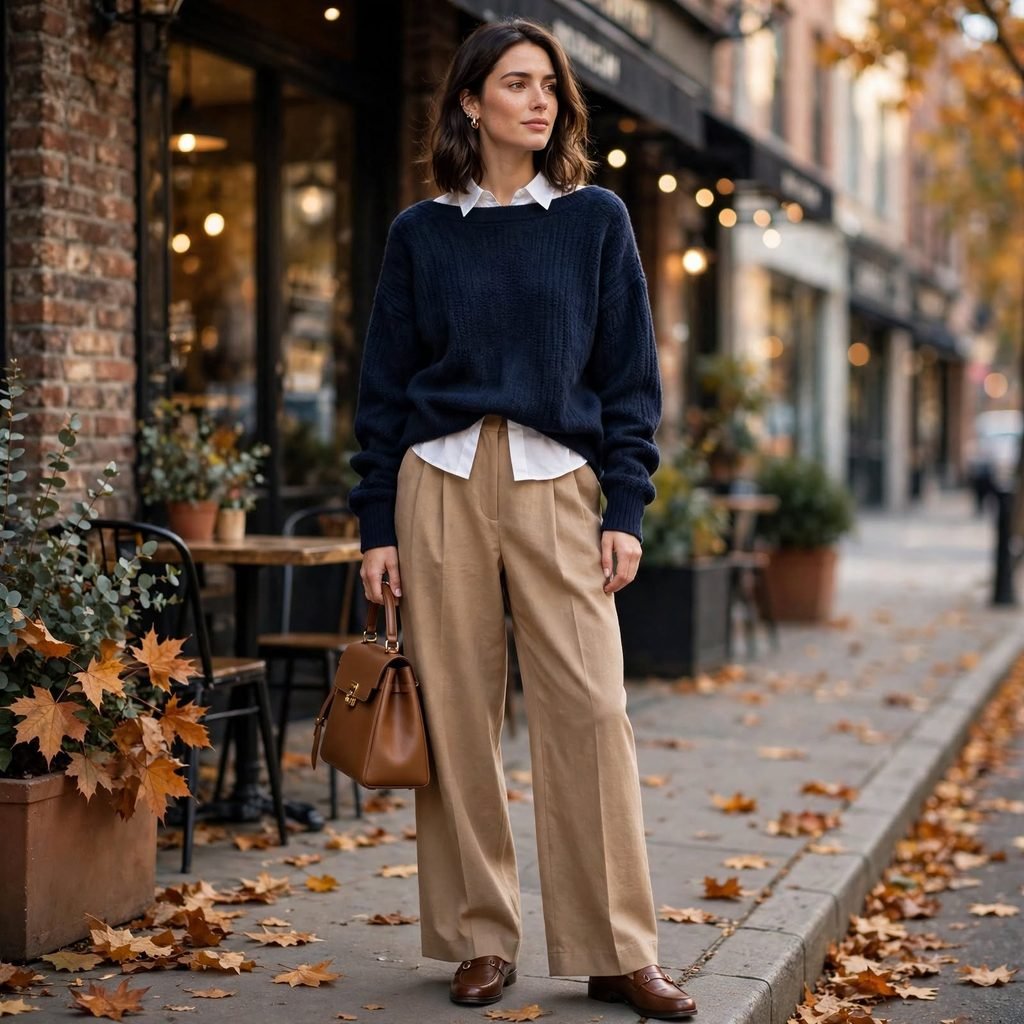
Layer a boat-neck or crewneck sweater over a collared shirt, leaving the collar points out at the neckline. Pair with straight-leg khakis. This layering is one of the clearest visual markers of the style because it relies on structure, not print or logo. Add loafers and a simple leather watch. Good for a casual daytime outing or errands. Practical tip: a slightly oversized shirt underneath lets the collar sit properly outside the sweater instead of pulling tight against your neck.
3. Wide-Leg Trousers With a Silk Camisole and Blazer
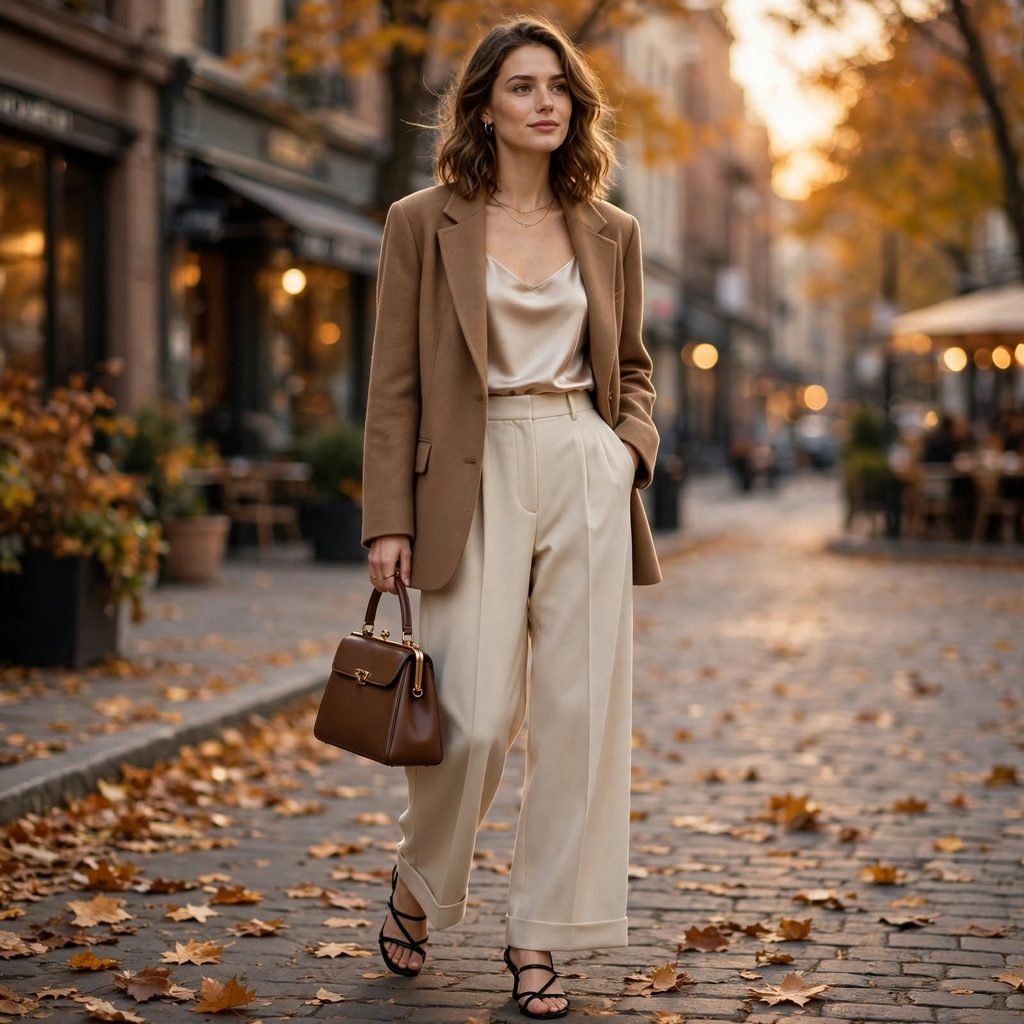
Pair wide-leg cream trousers with a silk camisole and an open blazer for a look that’s simple but relies entirely on fabric quality to carry it. Keep jewelry minimal since the silk and blazer are already doing the visual work. Add pointed flats and a small leather clutch. Good for a daytime event or a nicer lunch. Tip: silk camisoles wrinkle fast steam it right before wearing rather than pulling it straight from a drawer or suitcase.
Explore our old-money aesthetic collection for classic looks that never go out of style.
4. Rugby Shirt With Straight-Leg Chinos
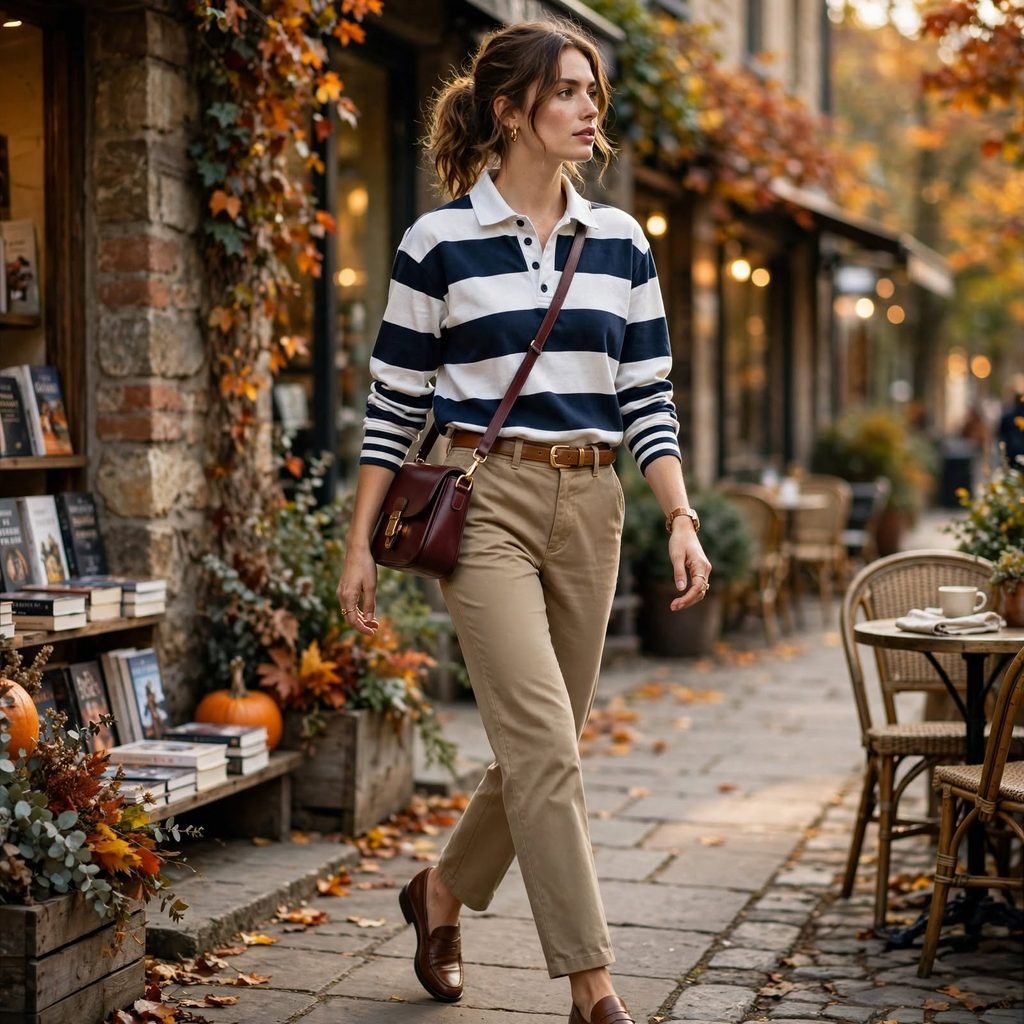
Wear a striped rugby shirt tucked into straight-leg chinos for a more casual, sporty branch of the style. The structured collar and placket keep this from reading as plain athletic wear, even though the shirt is technically sportswear in origin. Add boat shoes or loafers and a canvas belt. Good for a casual weekend outing or a relaxed outdoor gathering. Tip: a rugby shirt in heavier cotton pique holds its shape far better through the day than a thin jersey version.
Weekday Style
For work and daily life, where the style needs to hold up through a full day without much adjusting.
5. Double-Breasted Blazer With Wide-Leg Trousers
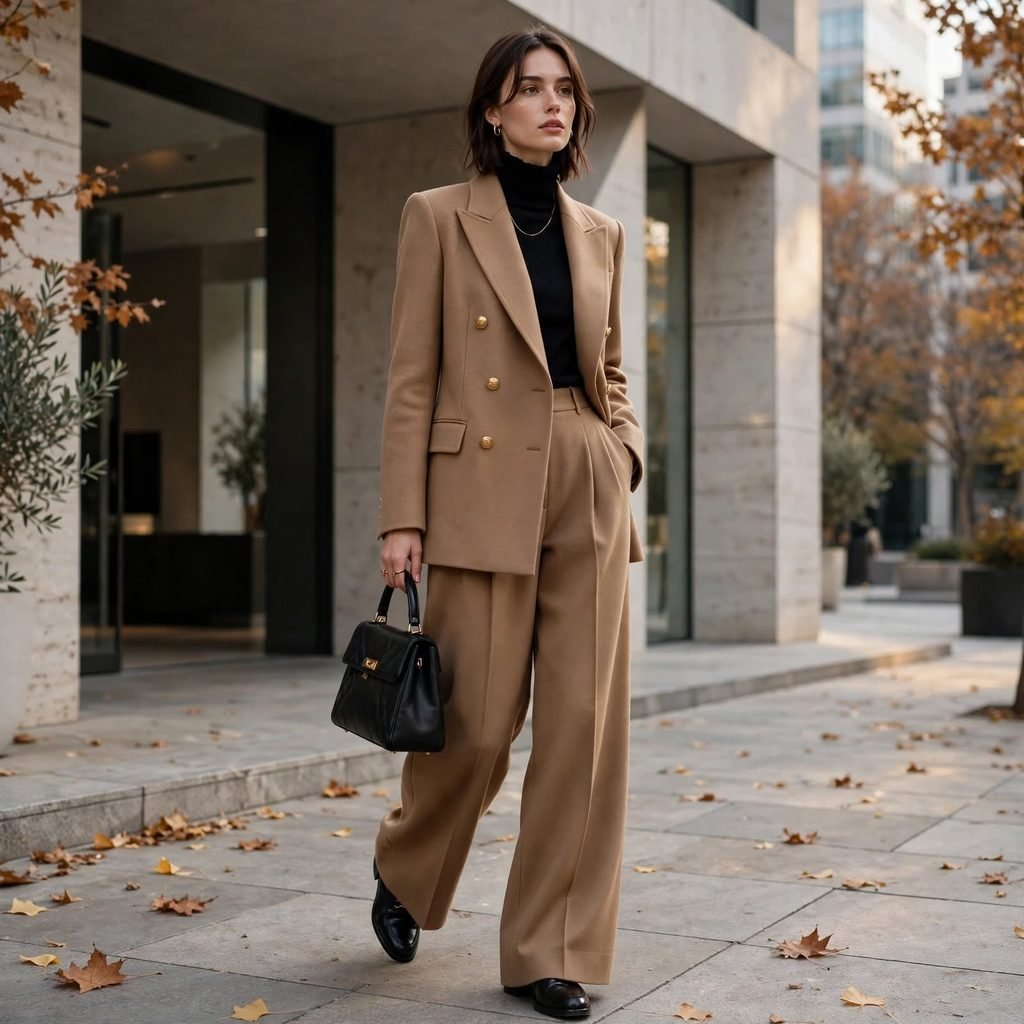
Wear a double-breasted wool blazer, buttoned, over a fitted turtleneck and wide-leg trousers. The double-breasted cut adds real structure at the chest, which is a defining detail of this style historically. Add loafers and a leather watch. Good for an important meeting or any day you want the outfit to carry real weight. Tip: double-breasted blazers only work buttoned wearing one open undoes the structured shape that makes the cut worth choosing in the first place.
6. Pleated Skirt With a Fitted Sweater
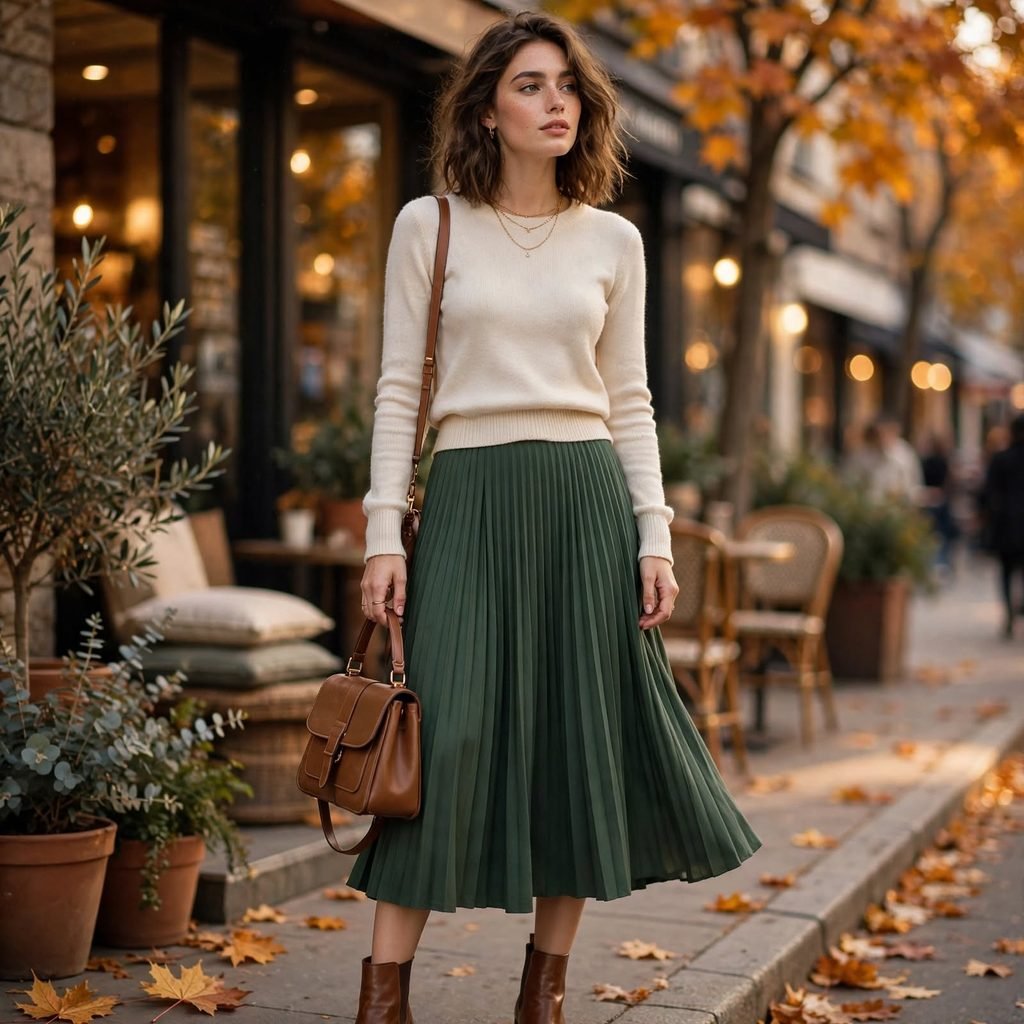
A pleated wool midi skirt paired with a fitted cream sweater, tucked in, gives a traditional silhouette that reads professional without needing a blazer layered on top. Add knee-high leather boots and a structured tote. Good for client-facing work or a day you want the outfit to feel more considered than usual. Practical note: pleated skirts hold their shape through a full day of sitting far better than a straight skirt, so they still look sharp after hours at a desk.
7. Sweater Vest Layered Over a Turtleneck
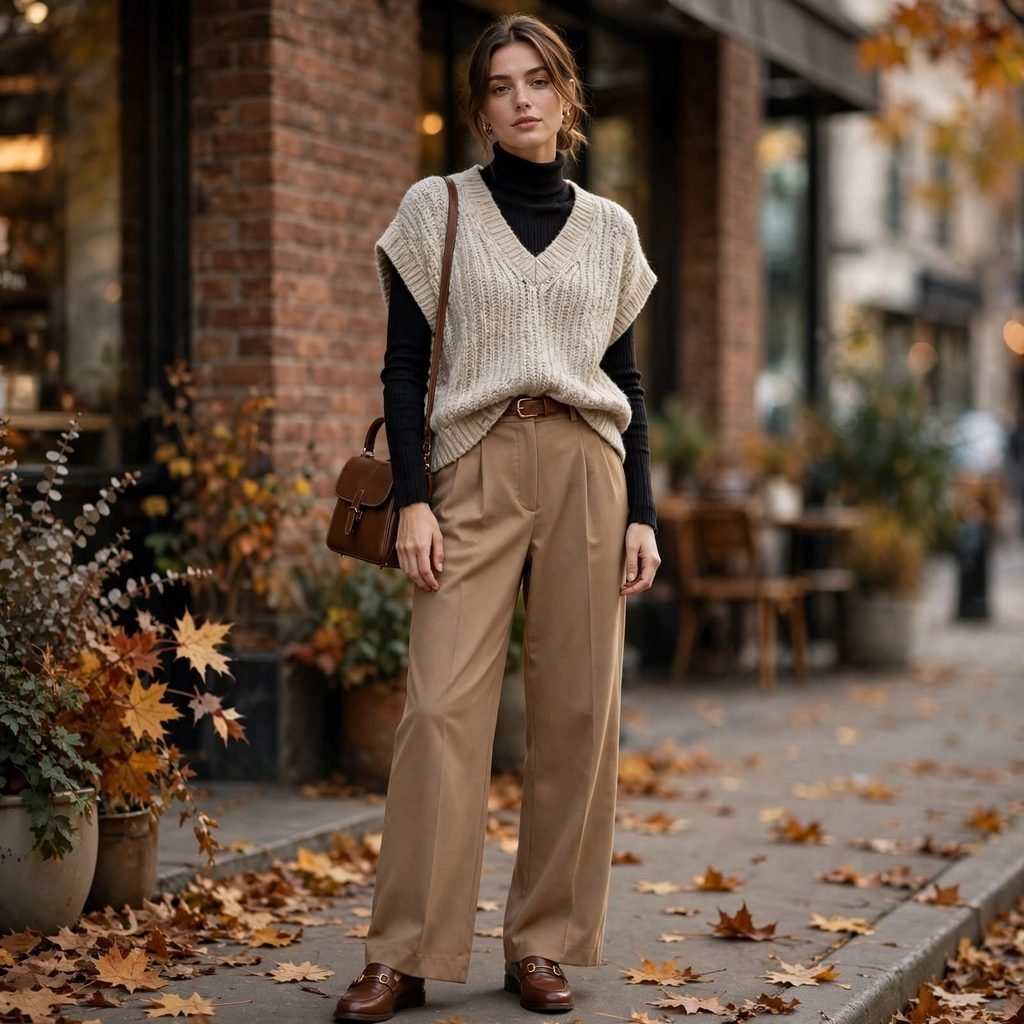
Layer a sweater vest over a fitted turtleneck instead of a button-down, tucked into tailored trousers, for a slightly softer take on this combination. The vest adds visual layering without bulk, which matters if you’re sitting most of the day. Loafers and a thin leather belt finish it off. Good for a traditional office setting or a day you want to look composed without a full suit. Tip: keep the vest solid or in a subtle pattern a loud argyle print tips this toward costume rather than style.
8. Trench Coat Over a Simple Dress
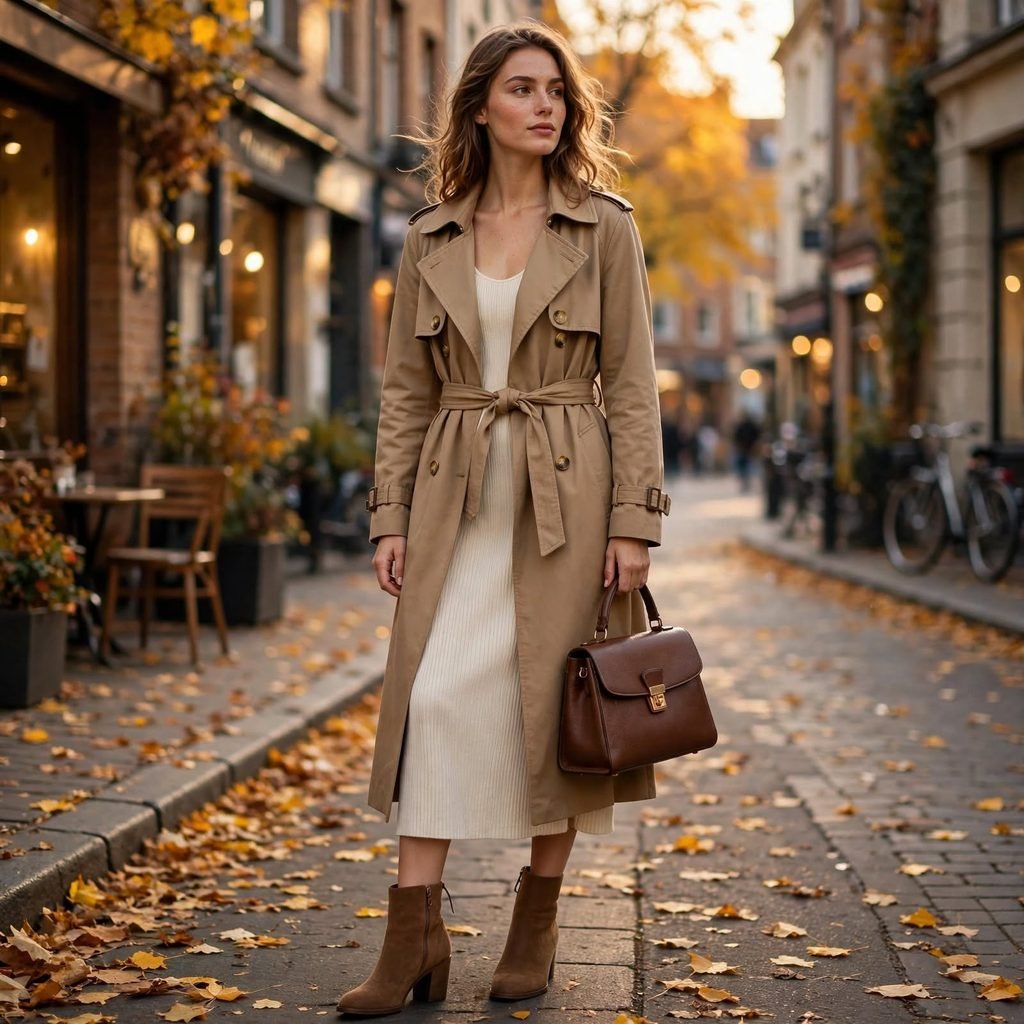
Wear a classic khaki trench coat, belted, over a simple sheath dress in a neutral tone. The trench does most of the visual work, so keep the dress plain and let the coat’s structure carry the look. Add loafers or low heels and a structured leather bag. Good for a workday with client meetings or a day with unpredictable weather. Practical tip: a trench in heavier cotton gabardine holds its belt structure and shape far better than a thin, lightweight version that wrinkles by midday.
Weekend Style
For brunch, errands, and casual social time where the style loosens slightly.
9. Quilted Vest Over a Button-Down
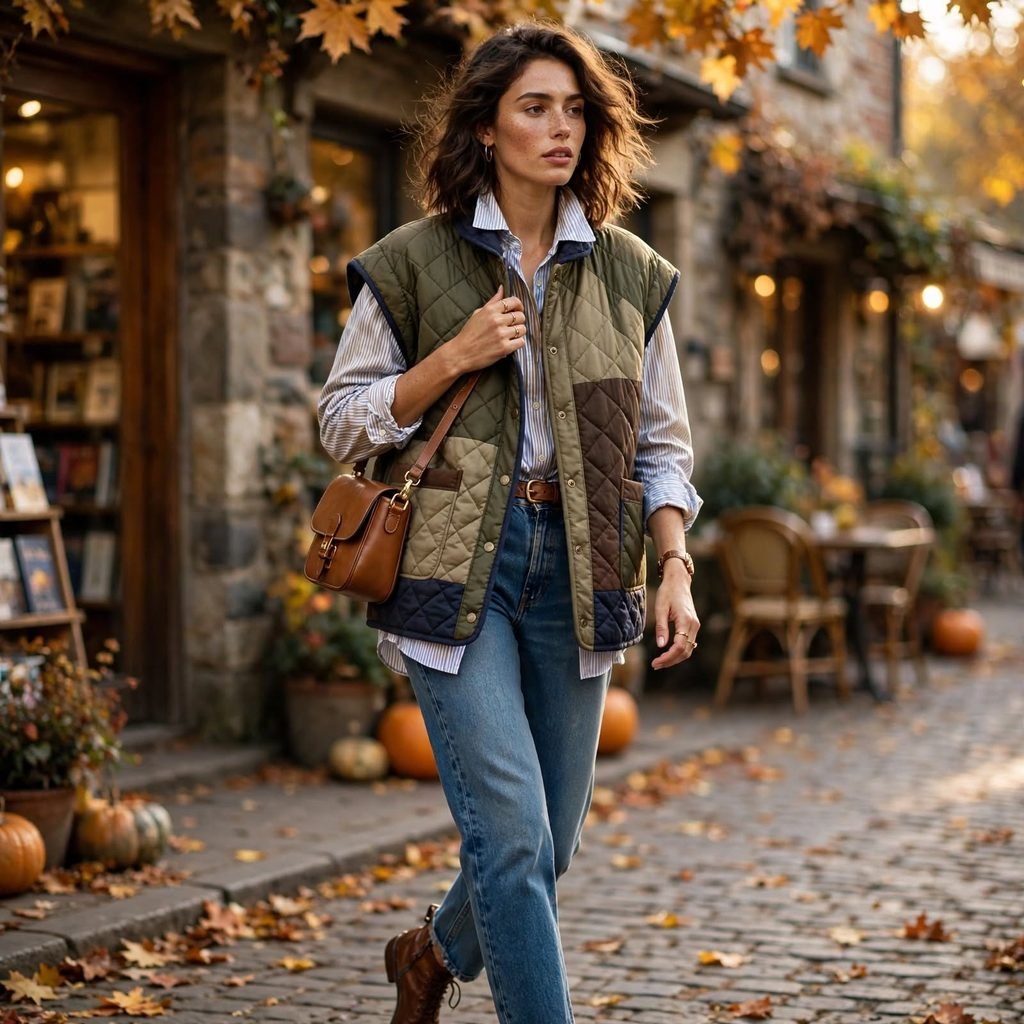
Wear a quilted vest, navy or hunter green, over a crisp button-down and straight-leg jeans. The vest keeps your core warm while leaving your arms free, and reads more intentional than a typical puffer. Add duck boots or leather boots and a canvas tote. Good for a fall weekend outing, like a farmers market or a walk with a dog. Tip: a vest in corduroy or waxed cotton fits this style far better than a shiny nylon one that looks pulled from a gym bag.
10. Polo Shirt With Tailored Shorts
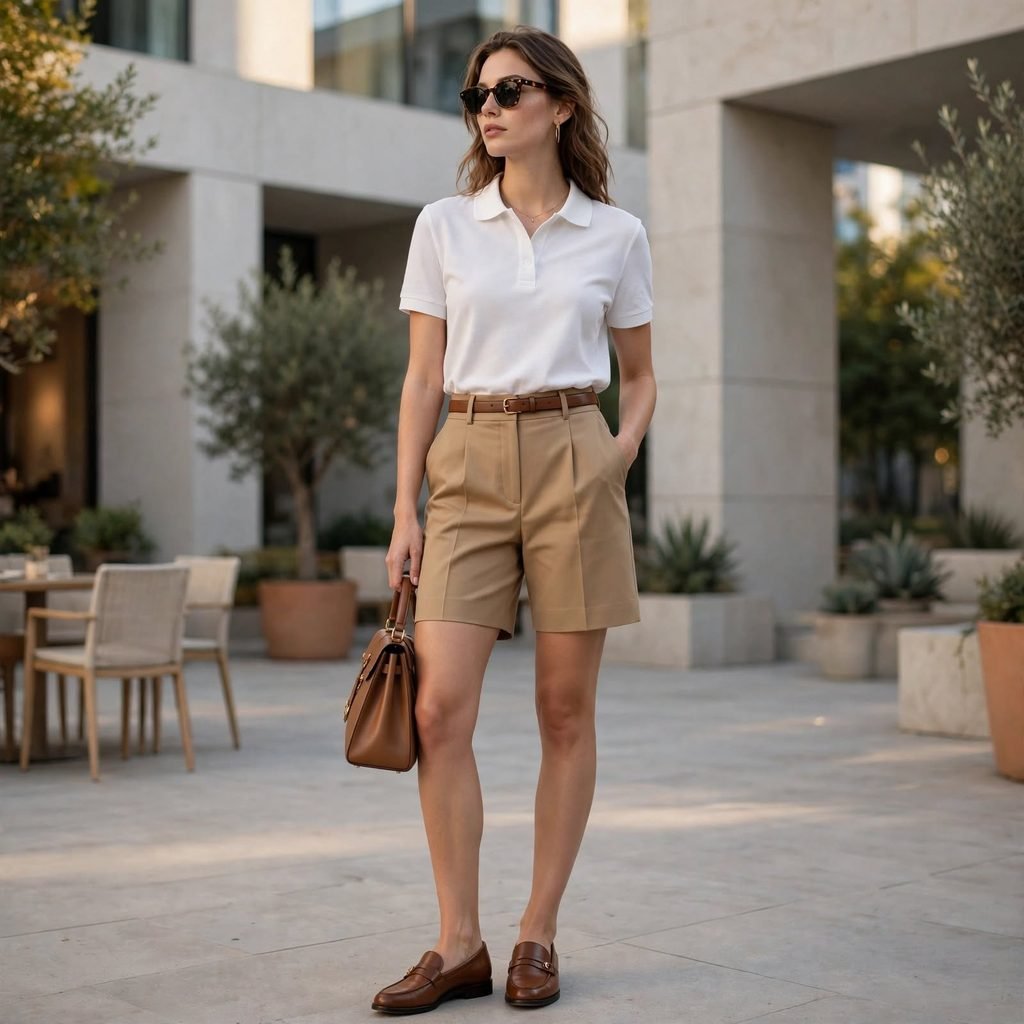
Pair a collared polo shirt, tucked in, with tailored shorts and a leather belt matched to your shoes. This is one of the simplest formulas in this style and works because both pieces are classic on their own. Add boat shoes or loafers and a simple watch. Good for a warm-weather outing or a casual club visit. Practical tip: a polo in heavier cotton pique holds its collar shape over a full day far better than a thin jersey one.
11. Quilted Barn Jacket Over a Cable Sweater
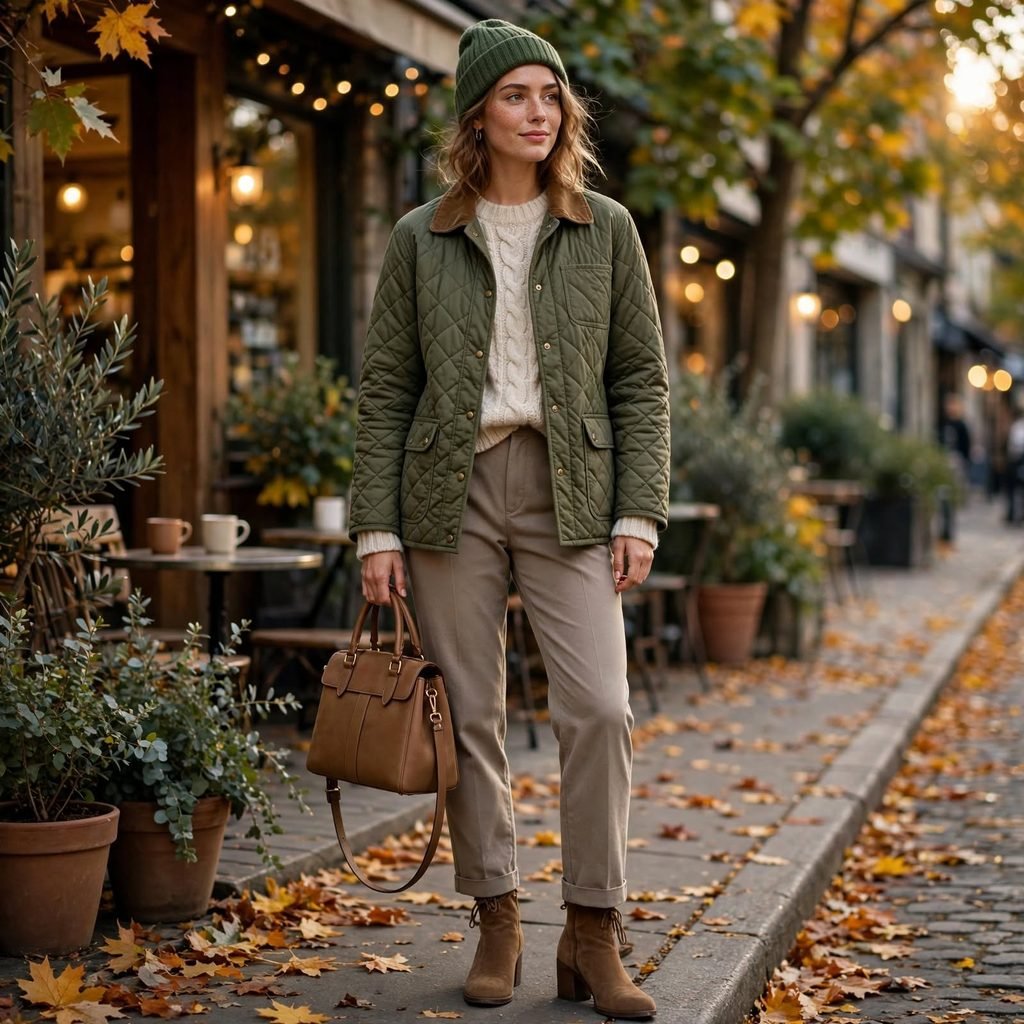
Layer a quilted barn jacket in olive or navy over a chunky cable-knit sweater and straight-leg jeans. The quilting adds real warmth without the bulk of a typical puffer coat. Add leather boots and a canvas tote. Good for a weekend outdoor outing, like visiting a farm or a long walk on a cold day. Tip: waxed cotton barn jackets develop a worn-in look over time that actually suits this style better than something kept pristine you don’t need to baby this piece.
Cold Weather Style
For days when the temperature is genuinely low and the outfit still needs to hold up against real wind and cold.
12. Wool Overcoat Over a Turtleneck and Trousers
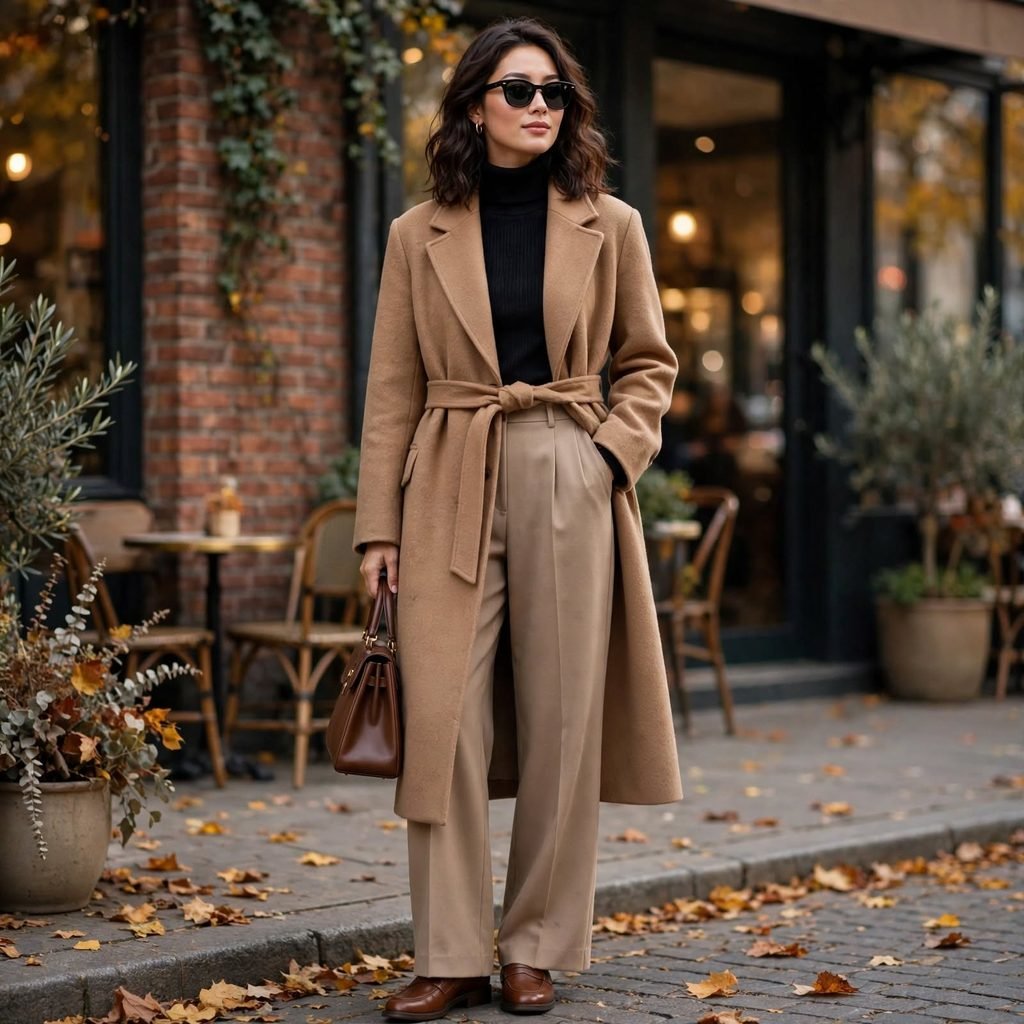
A long camel or navy wool overcoat over a fitted turtleneck and tailored trousers is the most reliable cold-weather formula in this style. Wool actually blocks wind, unlike a lot of trend-driven outerwear that prioritizes shape over function. Leave the coat unbelted for a straighter silhouette. Add leather boots and leather gloves. Good for a genuinely cold day outdoors, like a winter walk or an outdoor event. Tip: a coat that hits mid-calf blocks more wind than a cropped one, which matters more than people expect once temperatures actually drop.
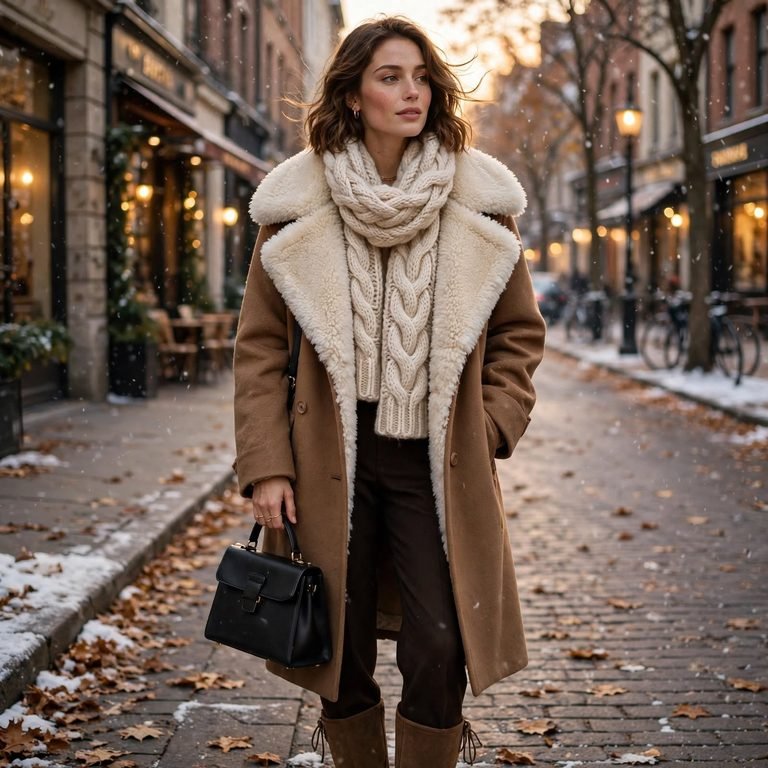
13. Shearling-Collar Coat With a Chunky Scarf
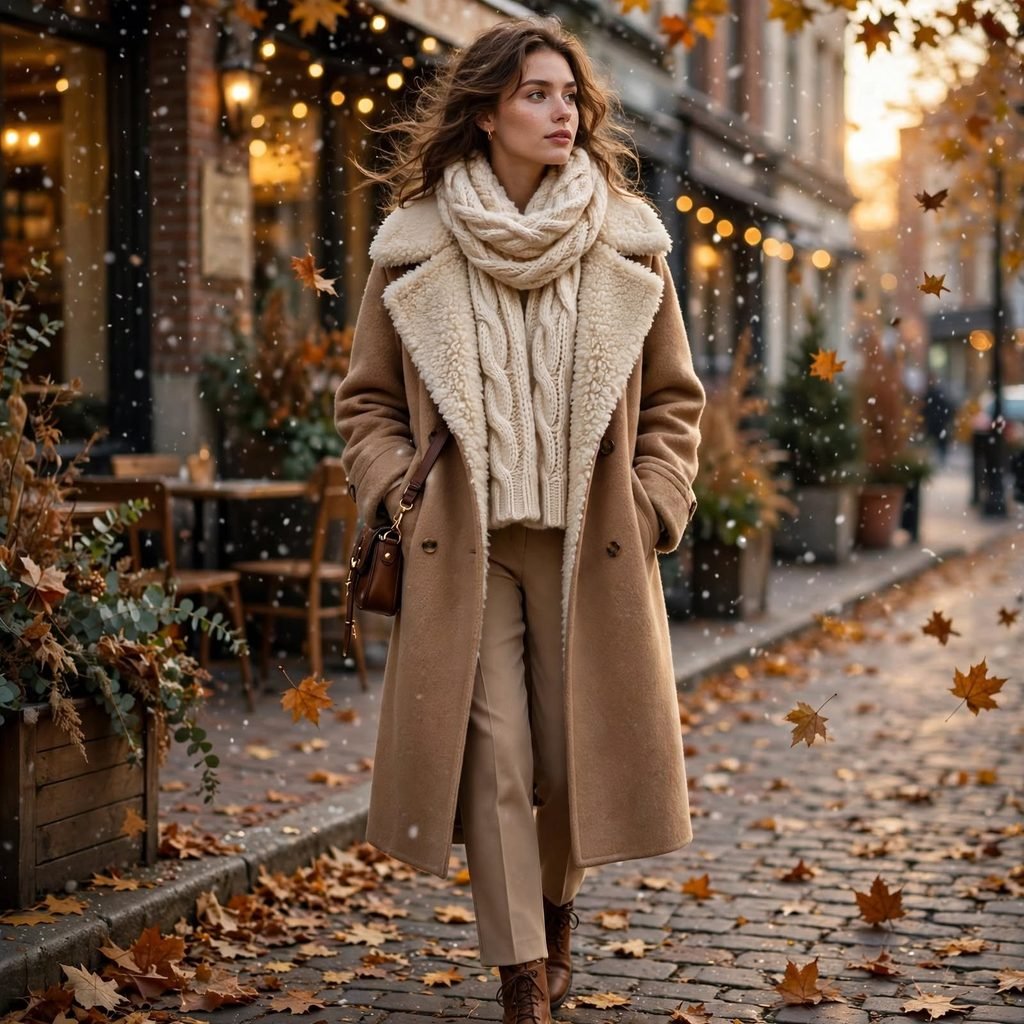
A wool coat with a shearling or faux-shearling collar, paired with a chunky wool scarf and straight-leg trousers, adds texture without breaking from the style’s narrow palette. Add leather boots and gloves. Good for a cold outdoor day, like a countryside walk or an outdoor gathering. Practical tip: a scarf in heavier wool, not thin cashmere, actually blocks wind at your neck, which matters more than softness once it’s genuinely cold.
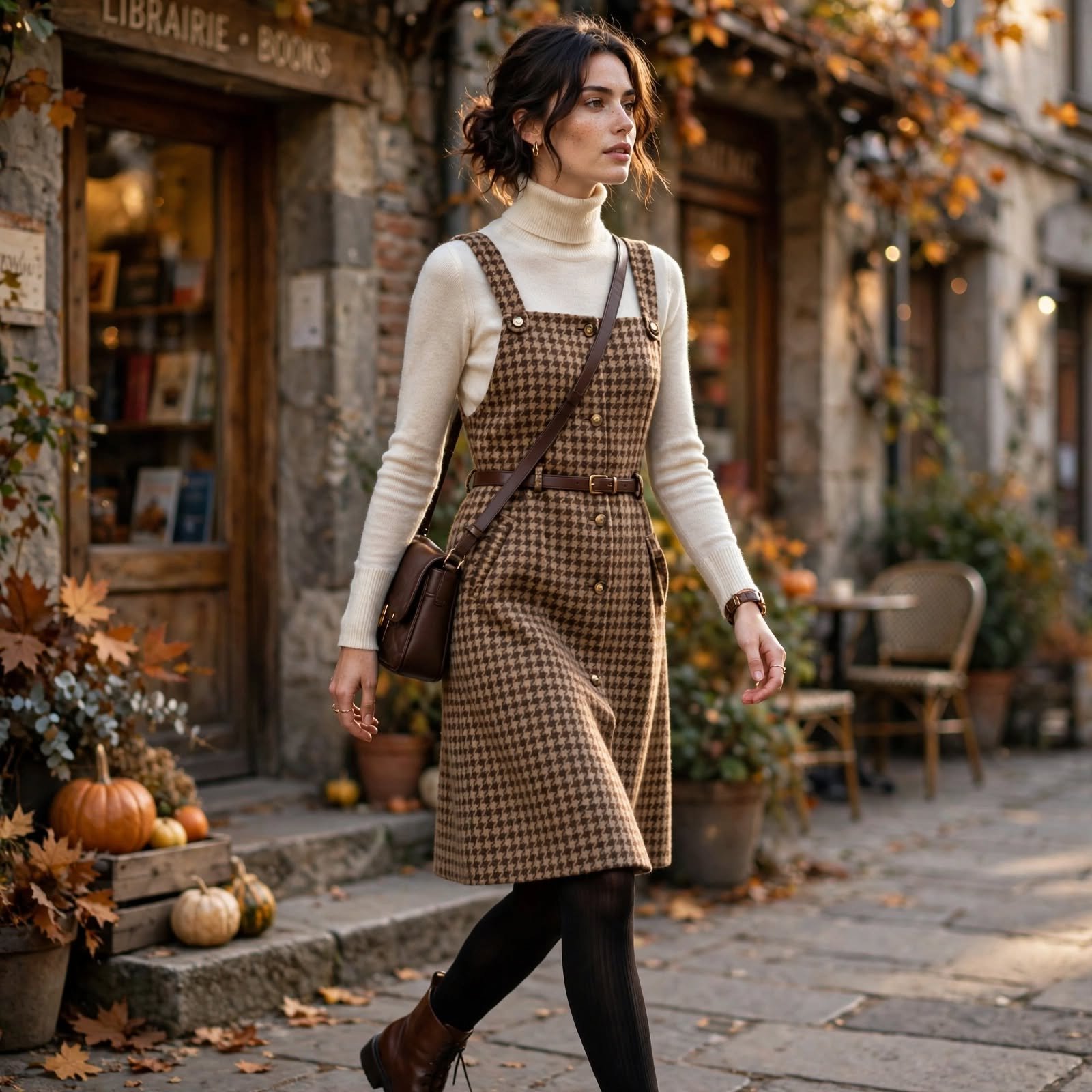
14. Turtleneck Under a Wool Pinafore Dress
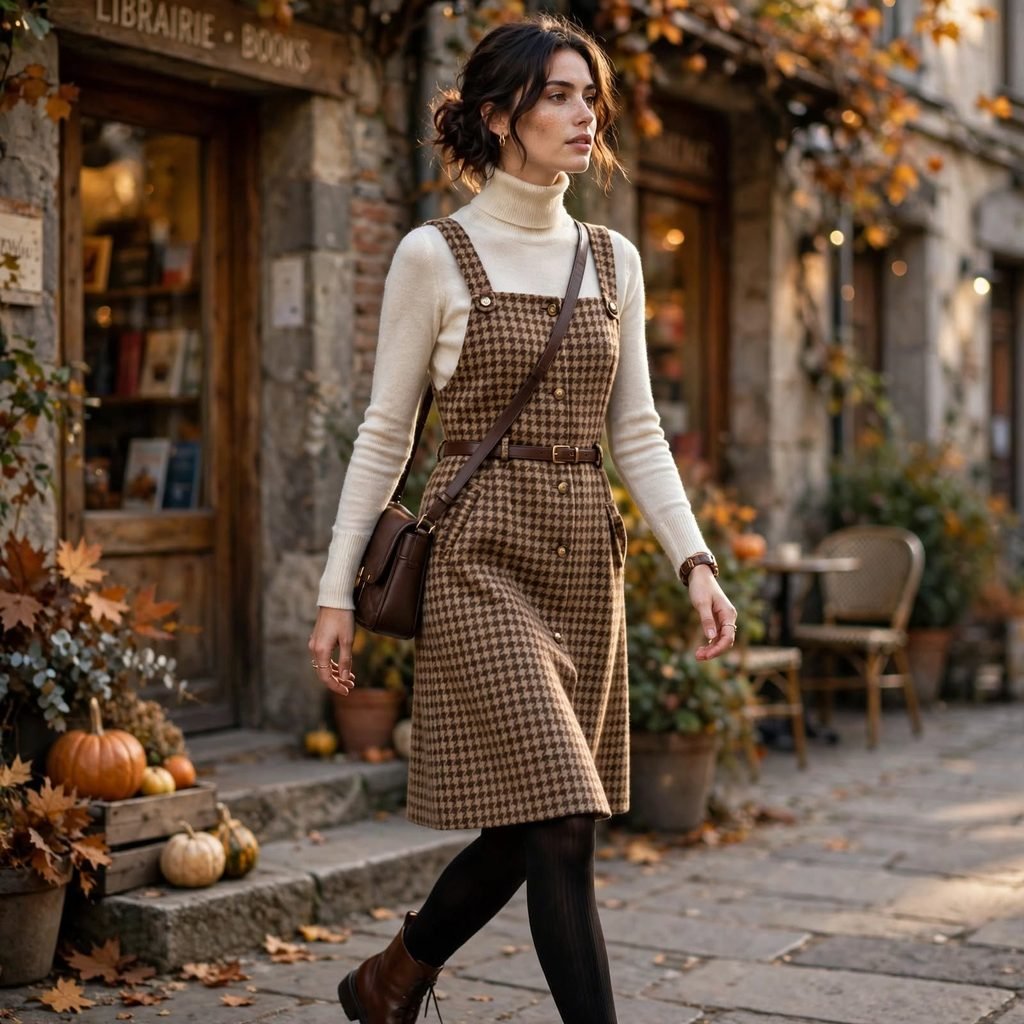
Layer a fitted turtleneck under a wool pinafore or jumper dress for a cold-weather combination that’s practical as well as polished. This works because the turtleneck adds real warmth without needing a bulky jacket layered over the dress. Add knee-high boots and a structured tote. Good for a cold daytime event or an outing that involves a mix of indoor and outdoor time. Tip: choose a turtleneck in thin merino wool, not cotton, so it layers smoothly under the dress without adding visible bulk at the collar or sleeves.
Evening Style
For dinners and events where this style shifts more formal.
15. Tuxedo-Style Blazer With Tailored Trousers
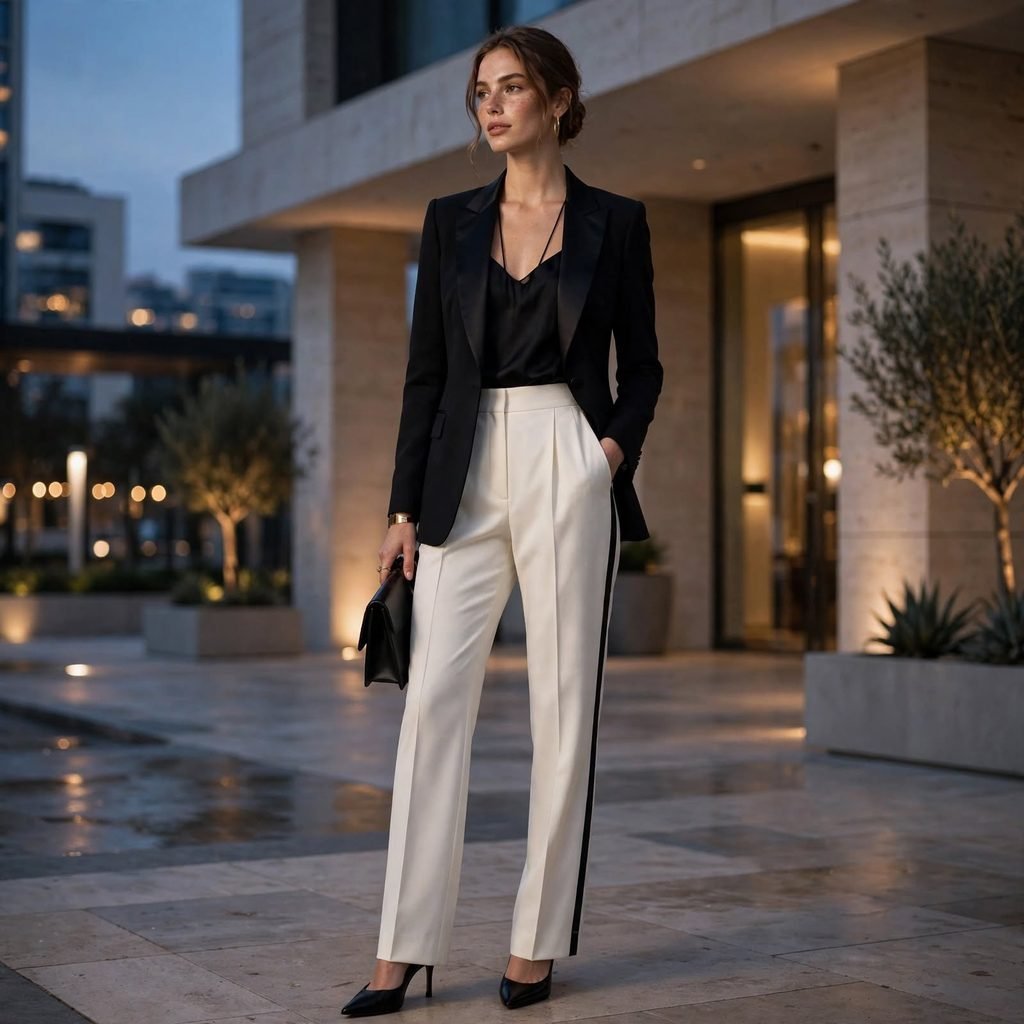
Wear a satin-lapel tuxedo-style blazer over matching or contrasting tailored trousers and a simple fitted top underneath. This is the most formal end of this style and works because the tailoring carries the whole look no extra accessories needed. Add pointed heels or loafers and minimal jewelry. Built for a formal evening event or a dinner with a stricter dress code. Tip: rent or borrow this piece if you only need it occasionally a well-fitted rental looks more intentional than an ill-fitting piece bought because it was cheaper.
The Practical Stuff Most Guides Skip
Temperature guide:
- 60–70°F: A vest, cardigan, or light sweater layer over a collared shirt is usually enough.
- 45–60°F: Add a wool blazer or barn jacket. Most of the classic layering in this style happens in this range.
- Below 45°F: A wool overcoat becomes necessary — synthetic outerwear undercuts the look and doesn’t block wind nearly as well as real wool.
The 10-piece capsule that mixes into most of these outfits:
- Tailored wool or wide-leg trousers in camel or navy
- Straight-leg jeans
- A cream or navy crewneck or turtleneck
- A crisp white or light blue button-down
- A structured navy blazer
- A trench coat
- A wool overcoat
- Penny loafers
- Leather knee-high or ankle boots
- A structured leather bag
With these ten pieces, you can rebuild close to half the outfits above just by swapping the top layer or adding one statement piece like a vest or rugby shirt.
FAQs
Is “old money style” the same as preppy style?
They overlap but aren’t identical. Preppy tends to be brighter, more playful, and print-heavy (think bold stripes and pastels), while old money style stays deliberately muted and relies more on fabric quality than pattern. Old money is closer to a quieter, more restrained version of preppy.
Do I need expensive pieces to build this style?
No fit and fabric matter more than price or brand. A well-tailored blazer from a mid-range store reads more accurately than an ill-fitting piece from a luxury label.
What colors should I avoid?
Neon colors, busy prints, and visible branding all break the look, since the whole point is a narrow, quiet color range. Stick to navy, cream, camel, hunter green, and burgundy.
Can this style work in summer, or is it only for cold weather?
It works year-round swap wool for lighter cotton and linen in warmer months, but keep the same silhouette and palette. A linen blazer in cream follows the same rules as a wool one in navy.
What’s the single best piece to start with if I’m building this style from scratch?
A structured blazer in navy or camel is the most versatile starting point, since it layers over turtlenecks, button-downs, and sweaters alike. It shifts an existing wardrobe toward this style more than any other single piece.
Does this style require tailoring, or can I buy pieces off the rack?
Off-the-rack works as a starting point, but tailoring especially sleeve and hem length makes the biggest visible difference. A cheap blazer that’s properly tailored will look more accurate than an expensive one that doesn’t fit.
The One Thing to Take Away
Every outfit here relies on the same two things: a tight, neutral color palette and pieces that are actually tailored to fit, not loose by default. Once you have a few well-fitting basics in navy, cream, and camel, you can build most of these looks without chasing specific brands or spending a lot of money.